薄膜按鍵應用範圍  

    Membrane by Definition is “thin and pliable”.
The concept is simple, a transparent flexible top layer is screen printed on its
undersurface with your specific design, whilst beneath, on subsequent layers
separated from each other by an insulating spacer, conductive tracks connect
with contact areas.
 
Some advantages of using a membrane switch over other types of switch devices are as follows :

 
    Thin and Flexible
Low Cost
Vibrant colors – fade Resistant
Weather / UV Resistant
Die and Print Emboss
Static, RFI and EMI Shielding
Metal Dome Tactile, Polydome Tactile, Embedded Led’s
Multiple Connector Options

 
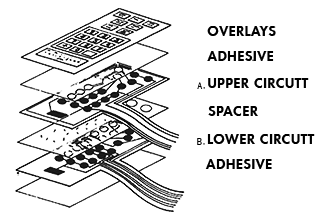
    一般薄膜按鍵含有下列各層  
   
 
表面層
於外觀用來表示功能及指引按鍵之正確位置的一層,又稱功能板或銘板、業界統稱面板。其材料一般常用為PC(Polycarbonate)及PET(Polyester)兩種。厚度從0.075㎜∼0.25㎜內之材料規格為較常被使用在薄膜按鍵上。另外還有其他素材亦可選用。
 
背膠層
於面板與上線路間的一層(一般稱之雙面膠)。其作用為將面板與上線路之基材利用膠(壓克力膠)之特性作貼合。其結構分為有基材及無基材(全膠)兩種。有機材又分含棉質及PET基材…等。厚度從0.05㎜∼0.4㎜間作不同的設計選擇。
 
導電線路層
包括上線路層及下線路層。位於表面層下方,其作用為具有迴路之功能。可藉由外力施壓再介由隔片或厚膜印刷作為絕緣及行程,使上線路層和下線路層間利用空氣流通之原理形成開路及短路之動作,再與主機板結合後,即能產生輸入之功能。其基材為PET一般厚度規格從0.05㎜∼0.25㎜較為較常被使用。
 
線路隔離層
為使上、下線路間保持「開路」之情況所設計出的一種隔離層,稱之為「隔片」。在「隔片」中開有孔位及通氣道、使空氣能充分的流通以利操作。


  A.上線路層:其導電面朝下具有「開路」、「短路」之功能  
  B.下線路層:其導電面朝上,以便使上、下層線路間可進行「開路」、「短路」之功能  


    一般上線路層多為導電接觸點。
下線路層為縱橫交錯之導電迴路。(但並非絕對、需視設計而定)

上述為一般基本結構,設計時得依實際情況酌情予以增減例如:下線路層可取代PCB,
而成為單一MYLAR線路片
 
       
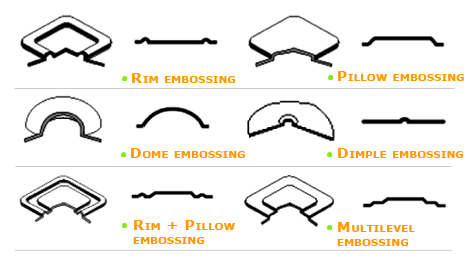
    薄膜按鍵種類  


* Notes:Any other embossing combination is up to you.